
Meet the Mastermind behind the installments of Final Fantasy
|
|
|---|
 Xtival Returns with "Xtival '09 Winter" and is expected to commence on 27th November 2009.
 Band Hero was released onto various consoles nearly a week ago and while most are currently enjoying the game (or maybe switched over onto Call Of Duty: Modern Warfare 2 in the process) the Xbox 360 and Playstation 3 versions of the game do allow previous downloaded songs from Guitar Hero World Tour , not to mention having the option of importing (yet again) the songs from previous guitar hero games, including the recent Guitar Hero 5.
 I recently recieved an e-mail from the "Sony Newsletter" saying that there "Playstation Video Store" service is now officially up and running.
 Most of you will probably find this rather old news, but id like to mention it anyway seeing as Band Hero isnt one of the "popular" Xbox 360 (and PS3) titles this holiday season.
 The latest Playstation 3 Firmware update, 3.10, officially went live this morning and one of the major features that has been added to the Playstation 3 is facebook.
 NAMCO have recently announced that on Thursday 26th November an Online patch will be released for Tekken 6 on the Xbox 360 and PS3.
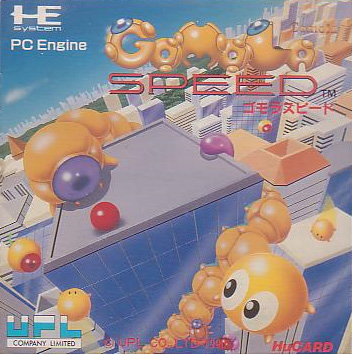 It is no secret that I am fond of strange & obscure games (and studios). That's why titles like Gomola Speed by UPL (1990 for PC-Engine, the Japanese TurboGrafx-16) were made for me.
 There are plenty of people who argue against video game emulation for many reasons, but let's face it, without dipping in now and again I would have never discovered little gems like this! Gomola speed puts you in command of a strange worm creature, with an expandable body of sorts.
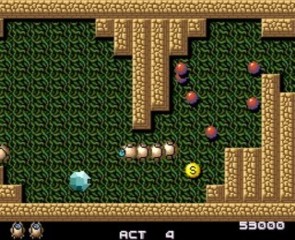 The goal is to reach the exit of each top-down mazelike level, avoiding enemies and capturing food (by encircling it with your body, similar to how Sega's NiGHTS attack mechanic works). Enemies can be stunned with bombs, then destroyed by similarly encircling them.
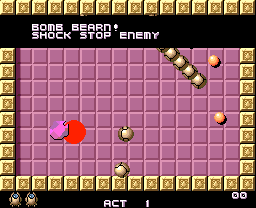 At the base your worm is just a head (vulnerable to death if an enemy touches it) but otherwise you can pick up "balls" to extend your body and therefore increase your food/enemy encircling ability. However, the longer your body, the lower your multiplier for points - although you will need all your body parts attached to gain passage through a level exit.
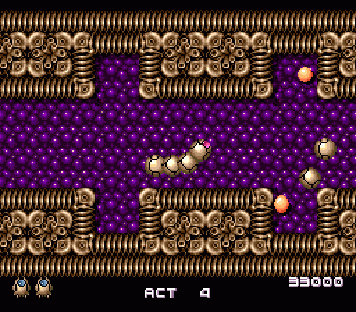 Hmm, the more I read what I am writing, the more this game sounds like some kind of trippy nightmare! In all seriousness, Gomola Speed is a very fun and unique spin on a proven game style - and typical of some of the weirder obscure titles available on this wonderful system. I'd love to see more titles of this genre be made available through re-release/virtual console.
 SEGA's latest (and much talked about) hack and slash, Devil May Cry styled, game - most commonly known as "Bayonetta" may not be released till early next year however fans following the game can now "rejorce" as the demo is now available for download on both UK and US PSN and XBL Accounts.
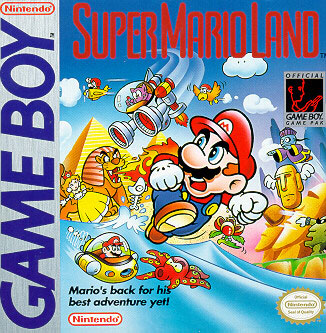 Super Mario Land by Nintendo for GameBoy, released at the system's launch in 1989. My, that was quite an eventful year then, hm? (Sega Genesis and TurboGrafx-16 each launched in the States that same year). Who knew..!
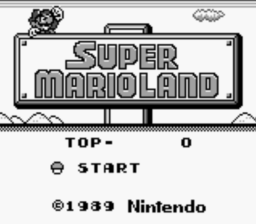 And so, we bring you Mario's first portable outing. Well, other than all of the LCD Game & Watches and such, which I suppose there were many of - but this was the first "big deal" in a way. With a new system to launch, and a new market to initiate (and conquer), Nintendo had a lot of work ahead of them once again. They may have not delivered with a fancy color display on their portable model, but titles with gameplay such as Mario Land and Tetris more than sufficed for the time being.
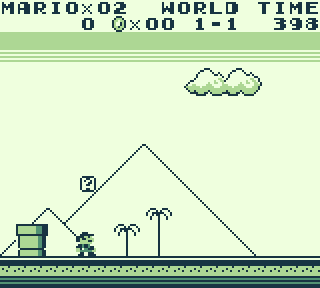 What we received was basically a very scaled-down version of what had previously worked (quite well) in the home market. Mario Land was not a clone of the original console experience, but it did a good job of aping many of the conventions while expanding upon them ever-so-slightly. The consumer base was quite satisfied with the result - though the game was quite shallow compared to other (larger) console releases appearing at the time, as a launch title on an unproven portable platform Mario Land could do no wrong, and it was very well-received.
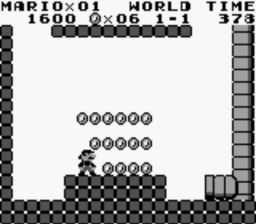
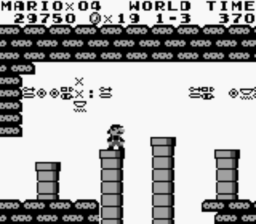 As usual, Mario is tasked with rescuing a princess (Daisy) from a new rival (Tatanga the Mysterious Spaceman... errr whatever!) Canon notwithstanding, the run-jump-dodge mechanics of the previous games were here in shrunken-down form. The fireball powerup was replaced with a "Super Ball Mario" (some things just don't translate well!) which could be used for angled attacks, and also to retrieve coins with.
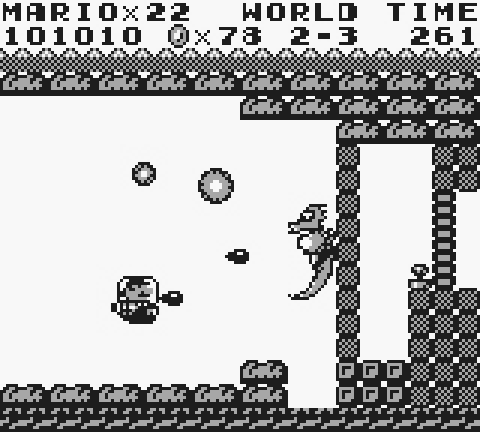
 New to this adventure was the inclusion of side-view shooting segments, 1st (and probably last!) in a Mario game. You'd take flight in Sky Pop or submerge with Marine Pop and dispatch with enemies. It felt strange doing this in a Mario game, but the deviance was welcome - Mario Land felt fairly "experimental" like a one-off anyway.
 The game looks very sparse and simple now, but at the time it was absolutely a blast to be able to play this without being tethered to a normal TV setup. The game was charming in its diminutive nature, and the always-cute graphics coupled with the happy little soundtrack augmented the time-tested, if predictably average, gameplay. That's not to say the game was not well-designed - though it wasn't taking any chances, it was a solid and enjoyable effort from beginning to end.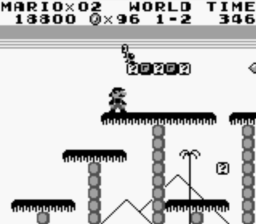
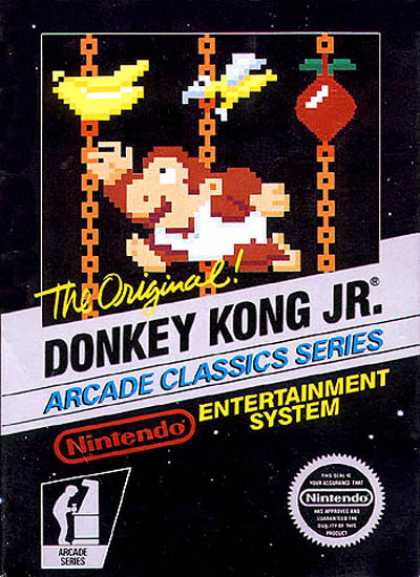 Donkey Kong Jr by Nintendo, released in 1982 in the arcade. The follow-up to their behemoth title which appeared a year earlier - how does this one measure up?
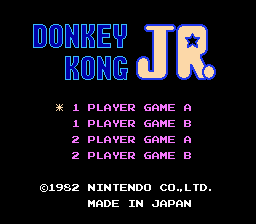 In the 1980s, as has been noted before in this column, sequels to arcade games often had little to do with the previous installments of games they were based on, sometimes sharing basic themes and little else - perhaps an evolution of mechanic. DKJR certainly falls into this category, as it is certainly similar to the first episode, yet the way everything works is quite different.
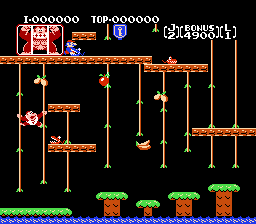 In the first game, the player controlled Mario, who was trying to rescue his girlfriend from the big ape's clutches. This time around, Mario is the enemy - he's captured Donkey Kong (turnabout is fair play, right?) and you control DK's son, attempting to rescue your daddy. "Such irony, Miyamoto!"
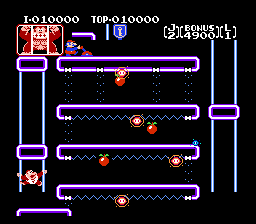 Anyway, it works. The game seems to be an evolution of the previous engine, you still have a large Donkey Kong sprite holding the top spot at screen left - of course, this time he's imprisoned - and the game as whole is a lot more tropical and colorful. Mechanic-wise, Junior can jump like Mario did in #1 - but he can also grab and ascend up vines or poles.
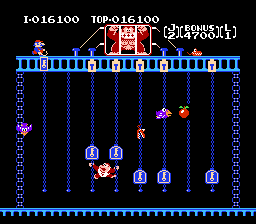 Like the first game, the goal is to reach the screen's top - but often you need to physically "grab" a key to represent freeing your dad, or (in the case above) push a series of keys into locks in order to liberate him. Offensively, gone are the mallets from the first game - Jr can drop fruit when climbing onto pursuing enemies below. This is pretty difficult to setup and not really worth the effort much of the time.
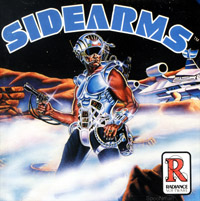 Side Arms, or Side Arms Hyper Dyne, depending on who you ask - released by Capcom in the arcades in 1986, and porting to the TurboGrafx-16 in 1989/1990 (Radiance).
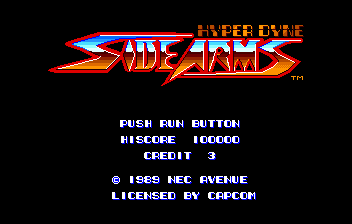 Yep! It is another outerspace shooter. Okay, so maybe I didn't play to many RPGs or Sports titles as a kid - don't worry, we will get to more of those in the future. The 1980s and 90s were pretty cluttered up with this stuff - and there was no shortage of them from Capcom, certainly.
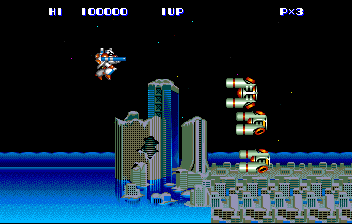 Side Arms was part of a "semi-series" (unnofficial, not connected by name) of shooters of "a guy flying through space instead of a straight-up spaceship" that Capcom was known for producing back in the day. In fact I can't think of any proper Gradius-style games they've ever released, can anyone enlighten me?
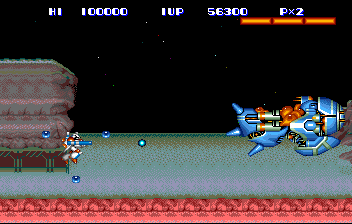 Following on the heels of Section Z (another "robot guy flying in space") and in a similar era as the ("unconnected") Legendary Wings, Side Arms felt like a distinctive mashup of the former and top-down historical-themed blaster 1943: The Battle of Midway. The powerups all seemed very familiar (the giant "POW" that you could pick up, and blast across the screen, the general art style and aesthetic, despite the completely different theme) and compared to their predecessors, the arsenal available to the player in this game was much more souped-up/impressive compare to what Capcom had put out there before. Side Arms lived up to its title, this game was all about blasting.
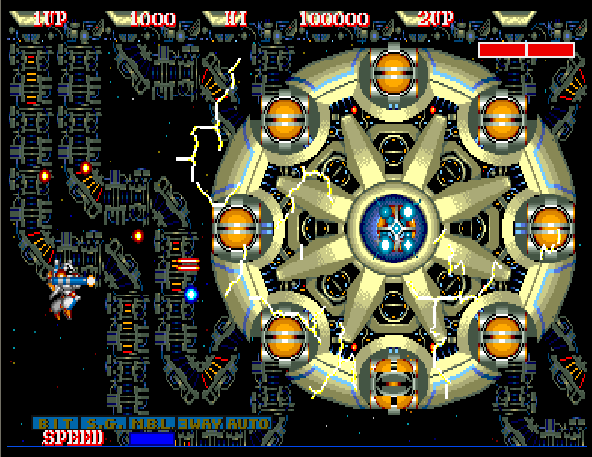 Of course compared to its brethren, Side Arms had a few distinctive things going for it. Number One was it was much more conventional at the time; very straightforward levels, large graphically impressive bosses awaiting you at each round's end. And Two, this was a 2-Player affair, like the contemporary Wings. Unlike that game, when a special powerup was collected the two-players could merge together into a "super warrior" (awkwardly controllable by both players!) with a very increased multi-directional shot. It was strange at the time, but different and therefore kind of cool.
 Monster Hunter 3 tri - the third console installment in the Monster Hunter franchise was released for the Wii on August 1, 2009 by Capcom and is the direct sequel to Monster Hunter 2. It was first announced for the Playstation 3, but was canceled. Capcom, specifically Capcom managing corporate officer Katsuhiko Ichii, announced on October 10, 2007 that Monster Hunter 3 will be a completely Wii-exclusive title.
I know it's a corny title but, hey, it doesn't hurt to occasionally pay homage to the movement that preceded what we now know as 'open source'.
2010. Could be a good year!
We have a revamped FreeGameDev forum. It was a big spanner in the works when the previous forum got lost, but in the long term it may have been a blessing in disguise. Now the forum is better organized, using more recognised software, and has a very nice theme designed by Qubodup.
I encourage project maintainers reading this post to go straight to the Project Showcase & Collaboration area and share your hard work with us and the community so that more people can learn of your games.
The FreeGameDev Planet has also since returned, also looking better with a new theme by the dedicated Qubodup. And let's not forget the FreeGameDev Wiki, the place to point any budding open source game developer.
I'd also like some feedback on another idea - an open source games subreddit. This would allow easier submission of game updates or news from anybody. It is moderated, so shouldn't fill up with spam. Since it is part of reddit, it may also result in massively increased exposure for popular submissions. It can also be themed, but there's no point putting effort into that if it's not something that'll get used, so... feedback! :-)
I'd also like to thank Julius for some good articles during a quiet period for Qubodup and myself, and long may it continue - Julius' contributing, that is, not the quiet period! I like to think that the blog does serve a purpose and the more quality content the better.
Well, I hope you have a productive year, and that we get to enjoy the many open source game updates that are going to occur. There are some good ones already that have slipped in during the festive season, but that's for another day!
- C
.jpg) R-Type by Irem, arcade release in 1987 and ported to several systems in the following years. Today the concentration will be on the Sega Master System port, released in 1988. There was also a release with the launch of the TurboGrafx-16 in the States, another year after that.
R-Type by Irem, arcade release in 1987 and ported to several systems in the following years. Today the concentration will be on the Sega Master System port, released in 1988. There was also a release with the launch of the TurboGrafx-16 in the States, another year after that..gif) Yes, R-Type - called "The Led Zeppelin of Shoot-em-ups," this game is known far and wide even all these years later as being one of the true genre-defining legends. It's story is strange - published in the arcades in the West by Nintendo, but appearing only (at the time) as a flagship Sega Master System cartridge, R-Type was a bit of an anomaly. I never saw the arcade until years later, but I did see the commercials - and then I got my hands on the cart.
Yes, R-Type - called "The Led Zeppelin of Shoot-em-ups," this game is known far and wide even all these years later as being one of the true genre-defining legends. It's story is strange - published in the arcades in the West by Nintendo, but appearing only (at the time) as a flagship Sega Master System cartridge, R-Type was a bit of an anomaly. I never saw the arcade until years later, but I did see the commercials - and then I got my hands on the cart..gif) The game was a sight to behold, one play and it was evident why we weren't getting this on the NES. The graphics were up there with the best of what was available at the time, the shooting action was intense, the stages and enemies were iconic and memorable. Shooters were far from a novelty (NES gamers had been enjoying the likes of Konami's Gradius and Life Force for years by now!), but this title changed the game in a lot of ways. Suddenly the genre was much more exciting then ever!
The game was a sight to behold, one play and it was evident why we weren't getting this on the NES. The graphics were up there with the best of what was available at the time, the shooting action was intense, the stages and enemies were iconic and memorable. Shooters were far from a novelty (NES gamers had been enjoying the likes of Konami's Gradius and Life Force for years by now!), but this title changed the game in a lot of ways. Suddenly the genre was much more exciting then ever!.jpg) The shots shown here are simple, a lot of sacrifices had to be made to get this to squeeze into the Master System's memory - even so, it was impressive. Dig up some shots of the TG-16 or arcade versions, and the pixel art still looks impressive and beautiful even in the modern day. The SMS version made a concession by throwing in a new level not found in the arcade or other ports.
The shots shown here are simple, a lot of sacrifices had to be made to get this to squeeze into the Master System's memory - even so, it was impressive. Dig up some shots of the TG-16 or arcade versions, and the pixel art still looks impressive and beautiful even in the modern day. The SMS version made a concession by throwing in a new level not found in the arcade or other ports..gif) R-Type stood out from others of its ilk by introducing the "Force" pod, a power-up which you could detach from your fighter and use as a free-floating "option" - or you could stick it to the rear and blast away at foes behind you. It was invulnerable ("hmm why didn't they just build the whole ship that way?") and could pass effortlessly through background scenery which would otherwise smash you - and was helpful to use as a shield from enemy fire. You could power up your weapons 3 times, using a vertical shot, a 3-beam reflective laser, or the awesome Ring Laser which ripped through enemies and just.. looked really cool. Additionally, you could pick up two separate "bits" which would each hover above and below your craft. Interestingly, they'd only fire if you used the Ring Laser - R-Type was the first game, to my knowledge, to give the player such an interesting "extended family" of firepower devices.
R-Type stood out from others of its ilk by introducing the "Force" pod, a power-up which you could detach from your fighter and use as a free-floating "option" - or you could stick it to the rear and blast away at foes behind you. It was invulnerable ("hmm why didn't they just build the whole ship that way?") and could pass effortlessly through background scenery which would otherwise smash you - and was helpful to use as a shield from enemy fire. You could power up your weapons 3 times, using a vertical shot, a 3-beam reflective laser, or the awesome Ring Laser which ripped through enemies and just.. looked really cool. Additionally, you could pick up two separate "bits" which would each hover above and below your craft. Interestingly, they'd only fire if you used the Ring Laser - R-Type was the first game, to my knowledge, to give the player such an interesting "extended family" of firepower devices..jpg) Also unique to R-Type was the "charge beam" - you could blast away with your rapid-fire finger, or hold down the button for a moment and charge that puppy; unleash away and a deadly, singular shot would release, very helpful when engaging bosses. Speaking of which, all the bosses in the game were gloriously and meticulously rendered, many looking like something out of HR Giger's nightmarish psyche - and it would be shameful to forget to mention the third stage battle cruiser, which you'd destroy in phases before engaging its engine for the final takedown.
Also unique to R-Type was the "charge beam" - you could blast away with your rapid-fire finger, or hold down the button for a moment and charge that puppy; unleash away and a deadly, singular shot would release, very helpful when engaging bosses. Speaking of which, all the bosses in the game were gloriously and meticulously rendered, many looking like something out of HR Giger's nightmarish psyche - and it would be shameful to forget to mention the third stage battle cruiser, which you'd destroy in phases before engaging its engine for the final takedown. Enjoy Retro Game of the Day? Please support us and pick up a copy of iFist for iPhone and Ipod Touch! Available NOW on the iTunes Appstore! It's just a buck!
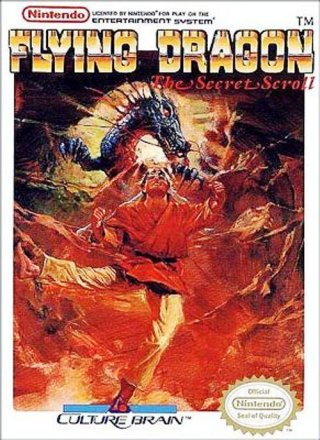 Flying Dragon by Culture Brain for NES, released in the USA In 1989.
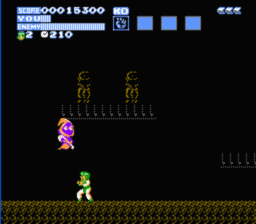
 Just another karate game.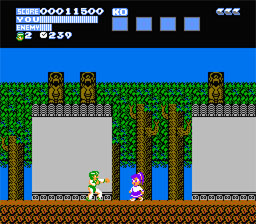
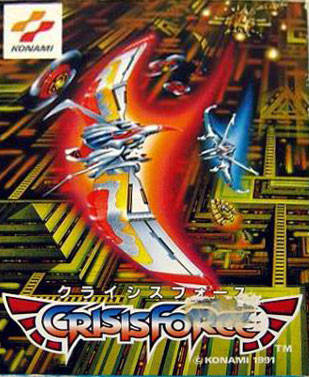 Crisis Force by Konami, an epic shoot-'em-up released for Famicom (Japanese version of the NES) in 1991. This was never released domestically. Much to my consternation!
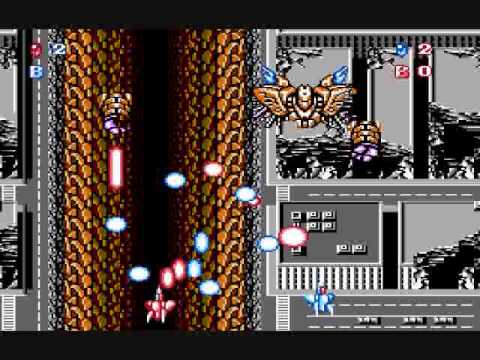 Crisis Force was a late entry into the Nintendo Pantheon of space shooters, so late that it actually never saw release outside of The Homeland. For what reason, I am not sure - it was a graphical tour-de-force with plenty of engaging gameplay for the style of game it was ("vertical shmup") and it featured 2-player simultaneous action. Ohh, that sounds dirty! The point is, the NES was never known for being able to push these types of games (fast-moving shooters with tons of detailed characters on screen) so this was absolutely a remarkable accomplishment.
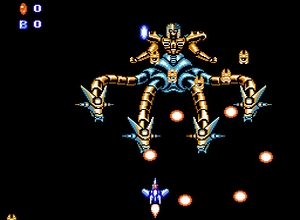 Even more so considering the amount of special FX going on. Pick up the game and the player will immediately notice similarities to 16-Bit titles like M.U.S.H.A., with several levels of detailed parallax scrolling trying to distract you as enemies fly in to destroy your fighter.
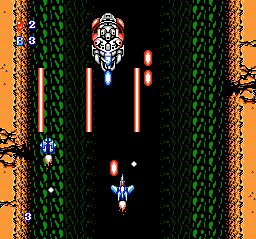 There is a lot of depth to this game (configurable ships, merging with the second player, mutitple weapons systems, etc) and the challenge can be quite daunting. Since it was such a late-day presentation, relatively few people knew it existed and therefore it never achieved the popularity of a Contra or Life Force. That's a shame, as this game was truly a labor of love and absolutely a testament to what the NES (errr, Famicom) could do when put through its proper paces.